Not too long ago, a recruiter for Uber wrote a post on LinkedIn which caught the attention of the recruitment community in the middle of their scrolling. He had successfully passed through all stages of interviews and even received an offer letter. A laptop was shipped to him. On the day of joining, however, he didn’t turn up. Trying to reach him proved fruitless; his phone showed no signal and his LinkedIn account had been scrubbed clean. The location where the laptop was sent had turned out to be an empty plot. Even more surprisingly, the laptop itself seemed to have been wiped clean and was sending signals from some unknown locations. In essence, “this guy skipped Day One. He created a fake identity and disappeared without leaving a single trace.”
It reads like a thriller. But for HR teams across India and globally, it’s an increasingly familiar pattern and a signal that candidate identity fraud has moved well past the edge cases.
What Candidate Identity Fraud Actually Looks Like
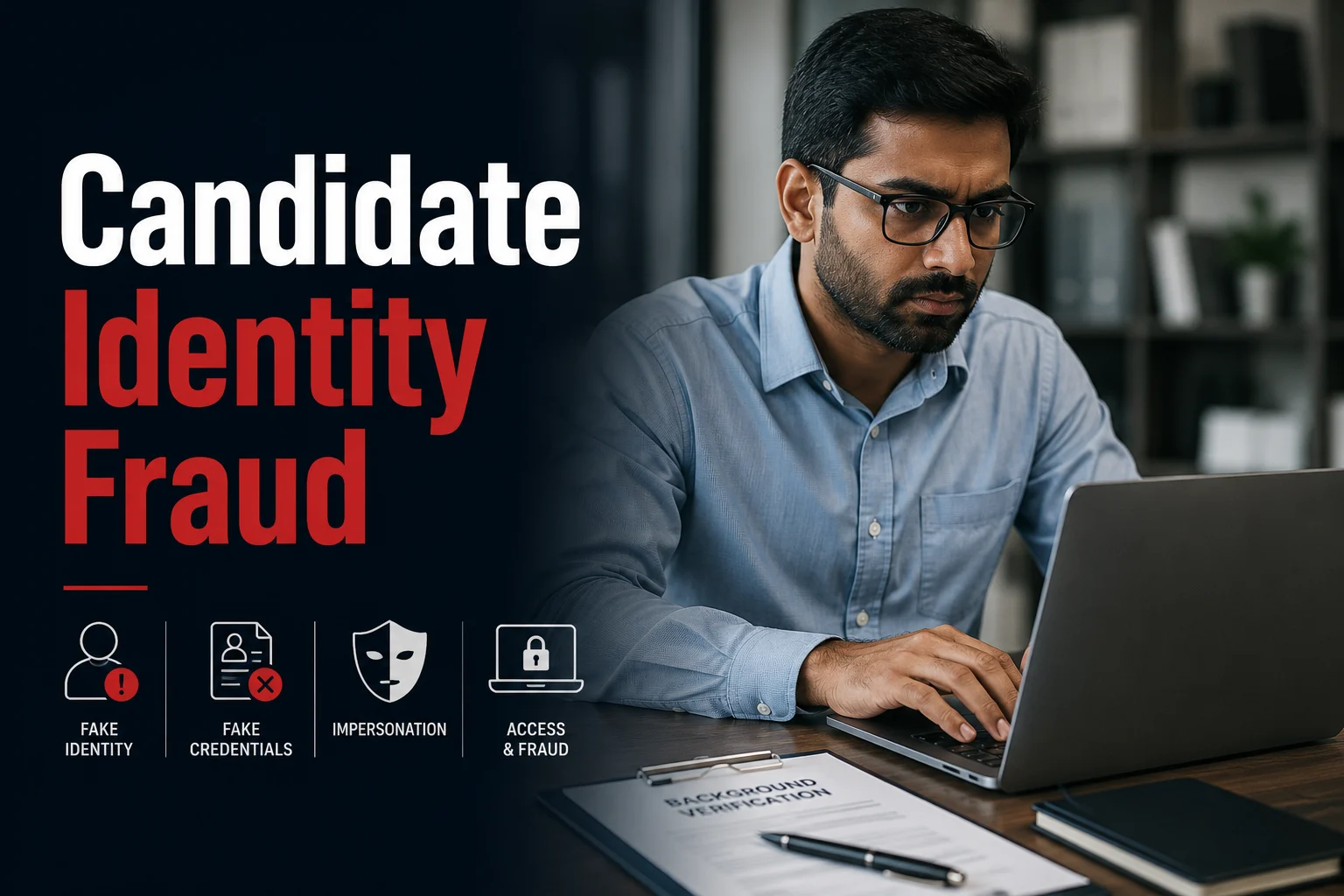
Candidate identity fraud is not limited to stolen documents or falsified degrees. Its modern form is far more sophisticated. A fake candidate in the hiring process today may use a fabricated professional identity assembled from real LinkedIn profiles, AI-generated credentials, and borrowed work histories. They pass resume screens, respond fluently in interviews sometimes with live AI assistance and disappear the moment they’ve extracted value: a signing bonus, company hardware, access to internal systems, or all three.
At its core, candidate identity fraud occurs when the person assessed during hiring is not the person who would actually perform the job or does not exist as presented at all. This includes proxy interviews (where a hired stand-in completes the process), synthetic identities (a blend of real and fabricated information), and full impersonation, where someone poses as a real individual with a verifiable record.
The Uber incident was a case of complete identity fabrication. The candidate had no real address, no real number, and no real digital trail beyond what was constructed for the purpose of the fraud. That level of sophistication is no longer exceptional.
The Scale of the Problem
The data makes uncomfortable reading for hiring teams. Nearly one in three hiring managers 31% report having personally interviewed a candidate who turned out to be using a fake identity, according to a survey of 3,000 managers conducted by Checkr in 2025. That’s not an industry-level abstraction; that’s individuals recalling specific candidates from their own pipelines.
Looking ahead, the trajectory is sharper still. Gartner projects that by 2028, one in four candidate profiles globally will be entirely fake a figure that is already finding early validation, given that 23.2% of applicants were flagged as fraud risks during real-time screening in late 2025.
These numbers reframe candidate identity fraud not as a rare compliance event, but as a structural feature of the hiring environment that pre-employment screening and candidate background verification processes must be built to address consistently and at scale.
Why the Fake Candidate in the Hiring Process Is Getting Harder to Catch
The reason candidate identity fraud is escalating has less to do with the audacity of fraudsters and more to do with the tools now available to them. AI has dramatically lowered the cost and skill required to construct a convincing professional identity. Deepfake video, voice cloning, and AI-generated documents can pass a casual interview and basic document review. At the same time, hiring teams face real pressure: roles need to be filled fast, remote hiring has reduced in-person verification opportunities, and the signals traditionally used to assess authenticity, polish, articulate answers, a strong portfolio can now be manufactured.
This creates an asymmetry that hiring fraud prevention strategies haven’t fully caught up with. The fraudster has time to construct a perfect identity. The hiring team has thirty minutes for a final interview.
Where the Verification Gap Opens Up
Most hiring processes in India still rely heavily on document submission and self-declaration during the early stages, with formal candidate background verification initiated only after an offer is made sometimes after the candidate has already been granted system access or had equipment shipped. That sequencing is a liability.
Candidate identity fraud thrives in the gap between offer and onboarding. A fake candidate in the hiring process who has cleared all assessment stages but not yet undergone employee identity verification can do significant damage in that window: extract sensitive data under the guise of onboarding, establish network access that persists after disappearing, or simply walk away with hardware.
The Uber incident made this gap visible in the most public way possible. But for every viral post, there are dozens of quieter versions, candidates who inflated identities to access senior roles they weren’t qualified for, or who provided just enough real information to pass a shallow pre-employment screening while concealing disqualifying history.
What Effective Hiring Fraud Prevention Requires
Closing the identity fraud gap requires rethinking when and how employee identity verification happens not just what it checks.
- Verification earlier in the process. Pre-employment screening should include identity verification before hardware is dispatched and before system credentials are created. The offer-to-onboarding window needs to close faster.
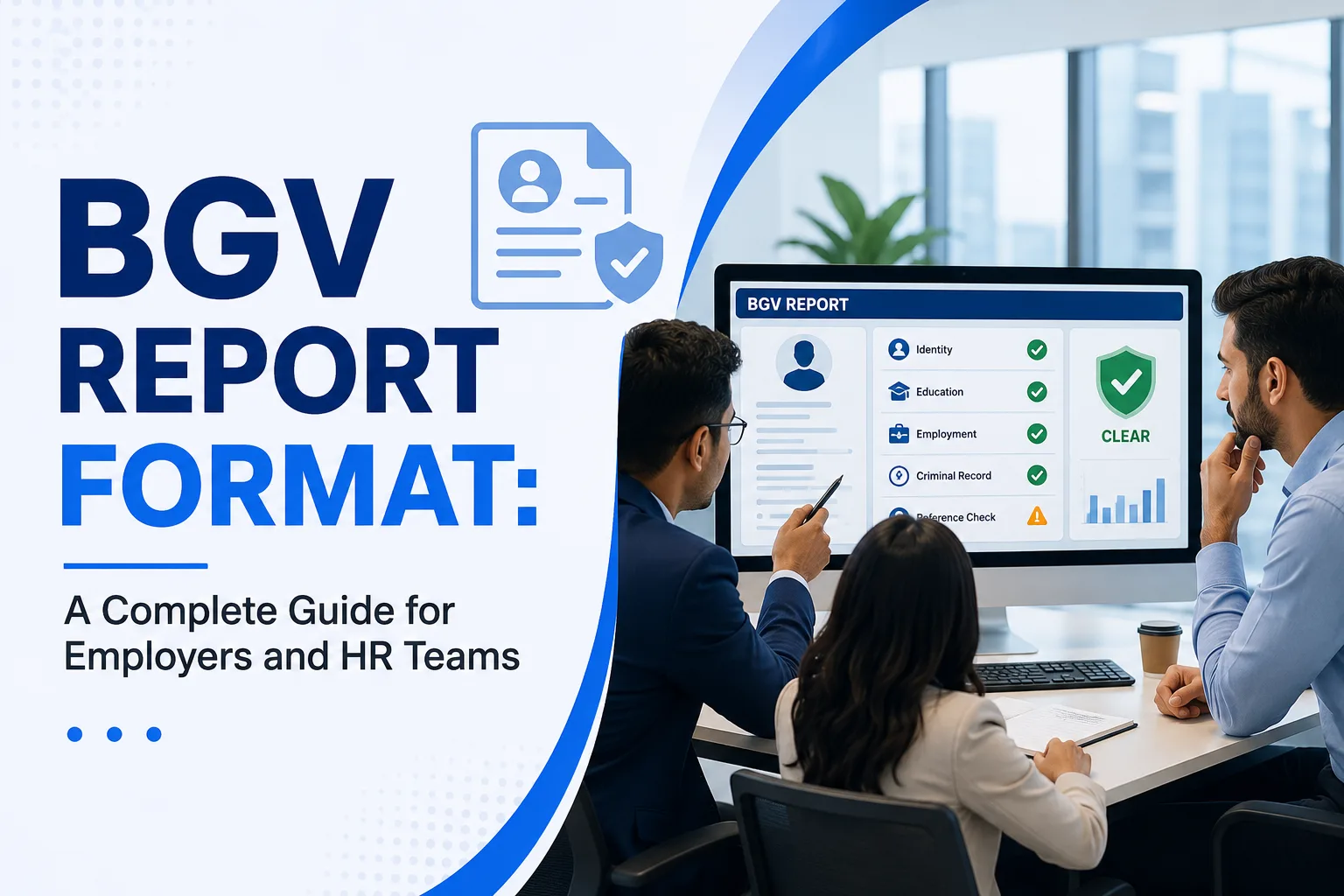
- Layered identity checks. Single-document verification is insufficient. Effective candidate background verification combines government-issued ID checks, liveness detection, cross-referencing against employment databases, and address validation not as a sequential checklist, but as a simultaneous, automated process.
- Anomaly flagging. Address mismatches, recently created digital profiles, inconsistencies between interview behaviour and document details these are signals that warrant additional scrutiny, not acceleration. Hiring fraud prevention depends on teams being empowered to pause and verify without feeling they’re slowing down a competitive process.
- Education for hiring managers. The Checkr survey found that nearly two-thirds of hiring professionals believe job seekers are now better at faking identities with AI than HR teams are at detecting them. That gap doesn’t close through technology alone. Hiring managers need to know what a proxy interview looks like, how to verify the person on the video call is the person on the resume, and when to escalate.
The Business Case for Getting This Right
The consequences of candidate identity fraud extend well beyond a lost laptop. A fake candidate who gains access to internal systems creates a data security exposure. A proxy hire who enters a sensitive role creates both performance and legal liability. A fabricated identity that passes background checks undermines the entire premise of compliance-linked hiring.
Pre-employment screening and candidate background verification aren’t administrative steps between sourcing and onboarding. They are the organisation’s primary mechanism for confirming that the person about to become an employee is who they say they are. When that mechanism is weak, everything downstream performance, trust, security, compliance is built on a foundation the organisation never actually validated.
Employee identity verification, when done rigorously and at the right stage, doesn’t slow hiring down. It makes the hire.
The recruiter who shared the Uber story closed with a line that’s equal parts humour and resignation: “Ethan Hunt genuinely, respect the craft. Bro, we want our laptop back.” The internet laughed. But the hiring community heard the real message underneath it: candidate identity fraud is organised, sophisticated, and entirely preventable if verification is taken seriously before the MacBook ships.