
A practical guide for Indian ecommerce employers – platforms, marketplaces, logistics companies, and D2C brands.
Introduction
The ecommerce sector in India is hiring at a speed most industries simply don’t see. Flipkart, Amazon, Meesho, Nykaa, Blinkit, Swiggy Instamart – every one of these platforms added tens of thousands of workers in the last two years alone. Delivery partners, warehouse staff, customer care executives, finance teams, data engineers. The roles are diverse. The scale is enormous. And the hiring pressure is relentless.
That pressure creates a problem.
When you’re filling 500 positions in a quarter and every hiring manager is focused on speed, background verification slips. It becomes a formality at best – a tick-box exercise at worst. And in ecommerce, where your employees handle customer homes, private data, and high-value shipments, that shortcut has consequences.
This plays out in a recognisable pattern. A delivery executive is onboarded under time pressure, checks are skipped or abbreviated, and months later the platform discovers a pattern of fraudulent cash-on-delivery transactions – orders marked as delivered that were never dispatched, money pocketed, customers filing complaints. A criminal and employment history check done at the point of hire would typically have surfaced prior instances of exactly this kind of conduct at a previous employer. It wasn’t done. The financial loss, the customer attrition, and the brand damage that follow are all downstream of one skipped step.
Ecommerce background checks are not a bureaucratic exercise. They are the most practical step you can take to protect your customers, your business, and your other employees from hiring mistakes that were entirely preventable.
In this guide, you will understand what ecommerce background checks actually cover, what the regulatory landscape in India requires, what happens when screening is skipped, and how modern verification works fast enough to fit your hiring timelines.
1. Why Ecommerce Is a High-Risk Hiring Environment
Most industries face some degree of hiring risk. Ecommerce faces a concentration of risks that few others can match.
Think about what an ecommerce employee actually has access to. A delivery agent visits customer homes daily, handles cash, and holds live address and contact information for thousands of households. A warehouse worker manages high-value inventory worth crores. A customer care executive has direct access to order histories, payment details, and personal identification. A data analyst processes purchase behaviour and financial patterns for millions of users.
Every one of these roles creates an exposure – not hypothetically, but in practice.
India’s ecommerce sector employed over 8 million people directly and indirectly as of 2024, growing at roughly 15% year on year. The gig economy layer – delivery partners and freelance fulfilment staff – adds millions more who interact with the platform under contract but with significant daily operational autonomy. Volume hiring at this scale means background verification often gets compressed or skipped entirely, particularly for contractual and blue-collar roles.
That is where fraud enters. And the patterns are consistent: delivery theft, fake returns, coordinated data exfiltration, insider-enabled account fraud. A 2024 report by the Data Security Council of India noted that insider threats accounted for nearly 34% of data breach incidents in the retail and ecommerce sector – a figure that reflects what happens when ecommerce background screening is not rigorous.
Ecommerce background screening is not about treating every candidate as a suspect. It is the basic operational standard your business needs when employees interact with customer homes, data, and money at scale – every single day.
2. What Ecommerce Background Checks Cover
Ecommerce background checks and employment verification look different depending on the role. A delivery executive needs different checks than a data engineer or a finance manager. The key is calibrating depth to access risk. Here is what a comprehensive ecommerce screening programme covers.
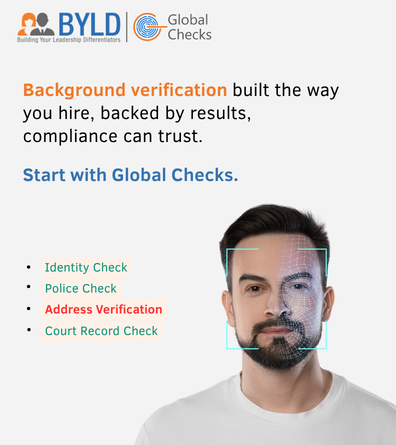
Identity Check
The single most fundamental check across every ecommerce role. Identity Check verifies Aadhaar, PAN, and passport details against government databases – confirming the candidate is who they claim to be. For delivery roles in particular, this is non-negotiable. Impersonation fraud – where a candidate submits another person’s verified documents – is more common than most HR teams realise.
Police and Criminal Check
Searches court and police records for convictions or pending cases involving theft, fraud, assault, or data-related offences. Police Check covers national and state-level records, including databases that candidate-submitted documents will never surface. For any role involving cash, high-value goods, or home delivery access, this check is essential ecommerce background screening.
Employment History Check
Ecommerce background checks and employment verification go together. A candidate dismissed from a prior logistics firm for theft will not mention it on their CV. Employment Check contacts previous employers directly and cross-references EPFO records – surfacing terminations, disciplinary actions, and suppressions that no self-submitted document will ever show.
Address Verification
For delivery roles and field positions, confirming a candidate’s actual residential address matters. A verified address reduces absconding risk and is essential for any role involving physical customer interaction. Address Check verifies the candidate’s current and permanent address through direct field verification – not just a database lookup.
CV and Education Check
For tech, analytics, and management roles – where inflated qualifications are common – CV Check validates claimed experience, designations, and responsibilities against actual employment records. Education check confirms degrees and certifications directly with issuing institutions.
CIBIL and Financial Check
For finance, accounts payable, and procurement roles, a CIBIL and financial background check reveals undisclosed debt pressures that represent a real insider fraud risk. CIBIL Check provides a structured view of financial history that HR can assess against role-specific risk thresholds.
3. Regulatory Requirements for Ecommerce Companies in India
No single statute in India mandates ecommerce background checks across the board. But the regulatory environment is moving in one direction – toward greater employer accountability – and several frameworks already create meaningful obligations worth understanding before something goes wrong.
Digital Personal Data Protection Act, 2023 (DPDP Act)
The DPDP Act is the clearest and most direct compliance obligation. If you run pre-employment verification, candidate consent must be explicit, specific, and documented separately from a general employment application. The consent should state which checks are being run, who conducts them, how data is stored, and when it is deleted. A generic clause buried in an offer letter is unlikely to satisfy this standard as enforcement matures – building a proper consent process now is the lower-risk path.
IT Act Considerations for Data-Handling Roles
For roles with access to customer data or payment infrastructure, the IT Act 2000 and its amendments are worth noting. While the Act doesn’t directly mandate background checks, onboarding someone with a prior cybercrime or data fraud conviction into a data-access role creates a risk profile that regulators and courts are increasingly likely to scrutinise if a breach occurs. It is less about strict liability and more about demonstrating reasonable due diligence.
EPFO Cross-Referencing
India’s EPFO records are increasingly used in ecommerce background checks and employment verification to independently confirm previous employment history – reducing reliance on candidate-submitted documents and employer call-backs that can be gamed by providing a fake referee contact.
Contractual and Gig Worker Considerations
The Code on Social Security, 2020 signals a direction of travel: greater regulatory attention to how platforms engage and document gig and platform workers. Formal enforcement remains limited, but maintaining verifiable screening records for all workers – permanent and contractual – is sound operational practice and positions you well ahead of where the regulation is heading.
4. Real Consequences of Skipping Ecommerce Background Screening
The consequences of not running ecommerce background checks are concrete and well documented. They fall into four broad categories.
Delivery and Inventory Fraud
Delivery executives and warehouse staff with undisclosed criminal or fraud histories are the most common source of theft-related losses in ecommerce operations. These range from individual package theft to coordinated fake return schemes that run for months before detection. In high-volume operations, losses from a single bad hire can reach lakhs before anyone connects the pattern.
Data Breach and Customer Harm
Customer data – names, addresses, contact numbers, order histories, payment instrument details – is extraordinarily valuable and routinely targeted by bad actors working from inside platforms. When an employee with a prior cybercrime or data theft conviction is not screened out at the hiring stage, your data security programme has already failed at its most basic line of defence.
Legal and Reputational Exposure
Ecommerce background checks and employment verification are increasingly relevant when a customer harm event leads to a legal or regulatory complaint. Negligent hiring is not as formally codified in India as in some Western jurisdictions. But the principle is increasingly referenced in consumer dispute proceedings and employment litigation, and regulators tend to ask whether basic checks were done when things go wrong. The practical risk is real even where the legal doctrine isn’t fully settled.
Customer Trust and Brand Damage
For consumer-facing platforms, a single publicised incident involving an unverified employee damages consumer trust in ways that no marketing spend repairs quickly. The reputational cost of not screening is rarely factored into the operational case against doing it – but it should be, because it is the largest hidden cost of all.
5. How Fast Ecommerce Pre-Employment Background Verification Works in 2026
The most common objection to rigorous ecommerce pre-employment background verification is time. HR teams in high-volume ecommerce environments argue they cannot wait five days for a check when they are onboarding 200 people a week.
In 2026, that objection does not hold.
Modern ecommerce background screening has been transformed by India’s digital infrastructure. Aadhaar eKYC enables identity verification in minutes. EPFO integrations surface employment history in hours. Court and police database APIs return criminal check results in 24–48 hours (Including business working days). The bottleneck is not the technology – it is knowing how to use it, and having the right integration in place.
What Modern Ecommerce Pre-Employment Background Verification Uses
- Aadhaar eKYC for biometric identity confirmation
- PAN and DigiLocker integrations for education and identity documents
- EPFO records for employment history cross-referencing
- Court and police database integrations for criminal checks
- Field agent networks for physical address verification
Standard checks – identity and criminal – complete in 3-4 business working days. Mid-level packages including employment history and address verification complete in 3–5 business days. Full packages for senior hires complete in 5–7 days. Ecommerce pre-employment background verification no longer needs to slow your hiring down.
GlobalChecks integrates via API with HRMS and ATS platforms, meaning e-commerce background screening triggers automatically at the offer stage. No manual re-entry. No document chasing. The process runs in parallel with your onboarding workflow – not after it. For high-volume blue-collar hiring, Blue Collar Verification is specifically designed for ecommerce and logistics operations where speed and scale both matter simultaneously.
6. Building Your Screening Framework
A one-off check is not a framework. Ecommerce companies need a structured, consistently applied ecommerce background screening programme that works for every role, every location, and every hiring volume cycle.
Step 1 – Map Roles to Risk Tiers
Define which checks apply to which roles based on access risk: home access, cash handling, data access, financial system access. Delivery roles need identity, criminal, and address checks as a baseline. Data and finance roles need the full suite. Apply checks proportionally – not uniformly.
Step 2 – Write a Screening Policy
Document which checks apply to which tiers, consent requirements under the DPDP Act, expected turnaround times, and your adverse action protocol. A written policy is your legal evidence of due diligence when a hiring decision is questioned after the fact.
Step 3 – Obtain Proper Consent
Issue a separate, specific consent form for background verification. It must state clearly what is being checked, by whom, how findings are used, and how data is stored and deleted. This is a DPDP Act requirement – not a best practice suggestion.
Step 4 – Verify Against Primary Sources
Always verify identity against government databases, employment history against EPFO and direct employer contact, and criminal records against court and police databases. Candidate-submitted documents are not sufficient verification. Sophisticated forgeries pass visual inspection. Only source-direct verification catches them reliably.
Step 5 – Build an Adverse Action Protocol
Define what happens when a check returns a concerning result. Who reviews it? Is the candidate given an opportunity to respond? What constitutes a disqualifying finding for each role type? Every decision must be documented and consistently applied.
Step 6 – Run Ongoing Monitoring for High-Risk Roles
For permanent employees in data, finance, or logistics management roles, periodic re-verification is increasingly standard. Criminal records can emerge after hiring. Employment history can be updated with new adverse findings. Continuous employment authentication tools allow this to happen automatically, without disrupting day-to-day operations or requiring HR to manually initiate each re-check.
7. Conclusion
Ecommerce moves fast. The hiring pressure is real, the timelines are tight, and the instinct to deprioritise verification under that pressure is understandable. But the instinct is wrong.
Your delivery executives visit customer homes every day. Your warehouse teams handle crores of inventory. Your data teams hold the personal and financial information of millions of users. The access you grant to unverified employees is the access you grant to whatever is in their undisclosed history – and in ecommerce, that undisclosed history has a way of becoming your company’s problem.
Ecommerce background checks in 2026 are fast, scalable, and built for the volume and role diversity that ecommerce operations require. Standard identity and criminal checks complete in 24–48 hours. Mid-level ecommerce background screening packages complete in three to five days. Full ecommerce pre-employment background verification for senior roles completes in five to seven days.
Ready to build a verified ecommerce screening programme? Visit GlobalChecks.in to explore role-specific packages for delivery, warehouse, tech, and management hires.
8. People Also Ask
Are background checks mandatory for ecommerce companies in India?
No single statute universally mandates ecommerce background checks for every company, but the regulatory environment is moving in one clear direction. The DPDP Act governs how candidate data is handled when you run screening. The IT Act raises the stakes for data-access roles. And when harm events occur, regulators and courts are increasingly interested in whether basic due diligence was done. The legal framework is still developing – but waiting for it to fully solidify before acting is the higher-risk choice.
How long does an ecommerce background check take in India?
With modern digital infrastructure, basic checks – identity and criminal – complete in 24–48 hours. Mid-level packages including employment history and address verification take 3–5 business days. Full packages for senior or high-risk roles complete in 5–7 days. API integration eliminates manual delays by triggering ecommerce pre-employment background verification automatically at the offer stage.
What is the most important background check for a delivery executive?
Identity verification and a criminal background check are the two most critical checks for delivery roles. They confirm the candidate is who they claim to be and surface any prior convictions involving fraud, theft, or assault. Address verification is also essential – it confirms the candidate’s residential location and reduces absconding risk for a role that operates with significant daily autonomy at customer homes.
Can an ecommerce company be held liable if an employee causes harm to a customer?
Potentially, yes – though the legal picture in India is still evolving. Negligent hiring is not formally codified the way it is in some other jurisdictions, but the principle is increasingly referenced in consumer disputes and employment litigation when an employer failed to conduct checks that would have flagged a foreseeable risk. The reputational and regulatory exposure is real and often more immediate than the legal liability.
Does ecommerce background screening apply to gig workers and delivery partners?
Yes. Gig workers and delivery partners often have more direct customer contact than many permanent employees. Ecommerce background screening should apply to all workers who interact with customers, handle goods, or access platform data – regardless of employment classification. Purpose-built packages for gig worker verification exist and are designed for the scale and turnaround speeds ecommerce operations need.
Table of Contents
Frequently Asked Questions
Ecommerce background checks are pre-employment verification processes that confirm a candidate’s identity, criminal record, employment history, address, and – for relevant roles – education and financial background before onboarding. In India’s high-volume ecommerce sector, they are essential for protecting customers, preventing internal fraud, and complying with the DPDP Act.
Data engineers, finance executives, and procurement managers require the most comprehensive ecommerce background checks because of their access to sensitive data and financial systems. Delivery partners need identity, criminal, and address checks as a minimum. Warehouse staff require employment history and criminal checks. Screening depth should always be proportional to the access risk of the specific role.
Review the finding with HR and the relevant line manager. Notify the candidate and give them an opportunity to respond and provide context. Assess the relevance of the finding to the specific role and access level. Document the decision. For criminal findings involving theft or fraud in a delivery or finance role, the finding is typically disqualifying – but every case must be assessed individually and documented consistently.
For high-risk roles – data access, finance, logistics management – periodic re-verification is advisable. Criminal records can emerge after a hire. Employment situations change. For senior roles, annual re-checks and continuous monitoring against court records represent standard practice and are increasingly expected under good governance frameworks.