
Table of Contents
When companies recruit new workers, one of the most critical procedures in hiring is the completion of an employee background check. Companies today cannot afford to hire carelessly because a single wrong hire can not only hurt productivity but also endanger the company’s reputation and safety. This is why companies in various industries outsource professional employee background check services to confirm that the individuals they hire are trustworthy, qualified, and reliable.
An employee background check is essentially the process of verifying a candidate’s personal, professional, and sometimes even financial history before finalizing employment. Employers rely on this to confirm that the details provided in the CV and during the interview are accurate. While many candidates present themselves honestly, there are also situations where information may be exaggerated or misrepresented. An effective employee background check acts as a filter that ensures organizations hire the right people.
Why Employee Background Checks Are So Important
Companies that have implemented employee background check services in their hiring strategy have discovered that it significantly reduces risks. From small startups to large corporations, employers understand that the expense of hiring the wrong candidate can be huge. Fraud, theft, data leaks, non-compliance with regulations, or even workplace safety risks can occur if a thorough background check on employees is not done.
Imagine a situation where a candidate claims to have a degree from a reputed university, but in reality, it is fabricated. Without an employee background check, the organization may hire them and later face reputational damage when the truth comes out. Similarly, in industries like banking, healthcare, or logistics, hiring without proper employee background check services can expose the company to compliance issues, fraud risks, and customer mistrust.
What happens if Companies Skip Employee Background checks
When companies don’t conduct proper employee background check services, they expose themselves to a range of potential risks.
- Legal risks: Hiring someone with an undisclosed criminal history may bring legal consequences if the individual engages in misconduct.
- Financial risks: If a candidate lies about their past employment or skills, the company may waste valuable training and salary expenses on someone who is not capable.
- Reputational damage: Customers and partners want to trust a business. Hiring employees without proper verification can lead to scandals or news reports that damage public trust.
- Workplace safety: A thorough background check on employees can help identify individuals with a history of violence, theft, or drug misuse, protecting other staff members.
In short, skipping an employee background check is like hiring with your eyes closed.
How Long Does an Employee Background Check Take?
One of the most common questions HR managers and job applicants ask is about the time required for an employee background check. The truth is, there is no one-size-fits-all timeline. The duration depends on several factors, including the depth of verification, the number of previous employers to be contacted, and the type of industry.
On average, a standard employee background check can take anywhere between 10 and 12 business working days. However, some checks may take longer depending on the complexity. For example:
- Identity checks like Aadhaar or PAN verification are instant.
- Employment verification may take 7-8 days if the past employer responds quickly.
- Education verification can sometimes take a week or longer, depending on how cooperative the university is.
- Court records or criminal checks may take additional time if multiple jurisdictions are involved.
Employers often rely on specialized employee background check services because these providers have the resources and networks to complete checks faster and more accurately.
Factors That Influence the Time Taken
There are many reasons why one employee background check may take longer than another. Here are some key factors:
Type of role being hired for –
- Senior-level roles may require more in-depth verification compared to entry-level roles.
- Address Verification
- Verifying a candidate who has studied or worked in multiple cities or countries will naturally take longer.
- types of background checks
- A basic check may include only identity and employment verification, while a detailed one may involve police records, court records, drug screening, and financial checks.
- Response time from institutions
- Many delays happen because past employers, universities, or government offices take time to respond to requests.
The Role of Employee Background Check Services
While HR teams can conduct certain verifications themselves, most organizations prefer outsourcing to professional employee background check services. The reason is simple -these service providers specialize in conducting thorough, accurate, and quick background checks on employees. They have established networks with universities, government offices, law enforcement agencies, and employers, which makes the process smooth and efficient.
Another advantage of employee background check services is compliance. Employment laws vary from state to state and country to country. A professional agency ensures that the entire process of how to check employee background verification is legally compliant, protecting the employer from lawsuits or privacy violations.
Common Myths About Employee Background Checks
Even though employee background checks are now a common practice, several myths surround them:
Myth 1: It invades candidate privacy
Reality: A background check on employees is done only after receiving consent.
Myth 2: All background checks take weeks
Reality: Many parts of an employee background check can be completed in a matter of hours or days.
Myth 3: It’s only for senior employees
Reality: Every role, even entry-level, benefits from background verification.
Myth 4: It ensures a flawless hire
Reality: Employee background check services mitigate risk but are no substitute for sound interviewing and assessment practices.
Background checks on employees are not an option but a requirement in the current hiring environment. The duration it consumes is dependent on the nature of the information being checked. Nevertheless, with the assistance of credible employee background check services, companies can expedite the process without sacrificing accuracy. Knowing the significance of an employee background check and what influences its length, HR professionals can make more informed hiring decisions that safeguard both their organization and workforce.
What's Included in an Employee Background Check
When most people hear the term ’employee background check’, they usually think of only criminal records or education verification. But in reality, an employee background check is a comprehensive process that involves multiple layers of verification to ensure the information provided by a candidate is authentic. Organizations rely heavily on employee background check services because these providers know exactly how to run accurate checks, how to manage data privacy, and how to deliver reliable results in a short time.
In this part of the blog, we will explore the types of background checks included in the hiring process, the step-by-step workflow, and how HR professionals and employers benefit by outsourcing to specialized employee background check services.
Step-by-Step Procedure of an Employee Background Check Each firm has its own process, but the overall procedure of an employee background check commonly has these steps:
- Candidate Consent
Prior to conducting any employee background check, businesses are required to get written permission from the job applicant. This is not only a legal obligation but also an ethical policy that assures openness
- Collection of Documents
The candidate provides identification documents, educational certificates, employment records, and any other relevant paperwork. These documents form the foundation of the employee background check services process.
- Verification of Identity
Identity verification is the first step of every employee background check. It ensures that the candidate is who they claim to be. This may include Aadhaar, PAN, voter ID, passport, or driving license validation. Many employee background check services also use biometric verification and liveness detection.
- Education Verification
Employers want to make sure that the candidate’s academic qualifications are genuine. Employee background check services confirm details such as course completion, degree authenticity, university accreditation, and year of graduation.
- Employment History Verification
One of the most essential parts of a background check on employees is employment verification. This step confirms previous employers, designations, tenure, responsibilities, and reasons for leaving. Employee background check services directly contact HR departments or managers to cross-verify the candidate’s claims.
- Criminal Record and Court Checks
To ensure workplace safety and compliance, employers request criminal record checks and court record verification. This may include checking local police records, national crime databases, and civil litigation history.
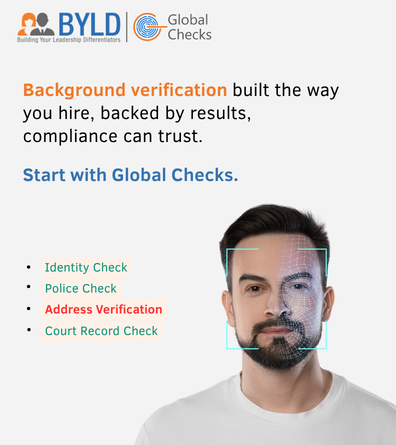
- Address Verification
Address checks ensure that the candidate actually resides at the location they have mentioned. This may involve physical verification or digital address validation methods.
- Financial and Credit History Check
For roles that involve financial responsibilities, employers may request CIBIL checks or credit history analysis to ensure the candidate has no red flags that could affect job performance.
- Drug and Health Screening
In industries like logistics, healthcare, or manufacturing, drug and health tests are a standard part of the employee background check services workflow.
- Reference Checks
Employers also validate personal and professional references to gain insight into the candidate’s behavior, integrity, and workplace ethics.
Different Types of Background Checks
Organizations use different types of background checks depending on the role and the industry. Let’s look at the five most common types of background checks conducted today:
1. Identity Verification
Confirms the legitimacy of a candidate’s identity documents and government-issued IDs.
2. Employment and Education Verification
Confirms the truth behind work history and academic qualifications.
3. Criminal Record Check
Ensures the candidate has no history of illegal activities, convictions, or ongoing legal issues.
4. Credit and Financial History Check
This is especially important for financial institutions or roles involving money handling.
5. Reference and Character Verification
Provides insights into the candidate’s personal and professional behavior from past employers or colleagues.
By combining these types of background checks, organizations build a complete picture of the candidate’s trustworthiness and suitability for the role.
How HR Teams Manage a Background Check on Employees
While the idea of conducting a background check on employees sounds straightforward, it is often complex in practice. HR professionals need to manage timelines, ensure data privacy, and handle multiple points of contact, such as universities, past employers, and government offices. This is why many organizations prefer outsourcing to employee background check services that already have established systems.
These services help HR teams by:
- Reducing administrative burden.
- Ensuring legal compliance with data protection and labor laws.
- Delivering faster turnaround times.
- Providing consolidated reports that are easy to interpret.
Technology in Employee Background Check Services
Modern employee background check services rely on advanced technology to speed up the process. Some of the commonly used tools include:
- Identity checks that verify government IDs.
- Verification in which they contact past employers or institutions.
- Global database access for quick criminal or civil record checks.
- Digital and Physical address verification.
The use of technology has not only made employee background check services faster but also more reliable and secure.
Legal and Compliance Factors
One of the most critical aspects of an employee background check is compliance with local laws. Employers cannot simply run checks on a candidate without their consent. There are also limitations on the type of information employers can access. For example, in many regions, medical history cannot be accessed unless it is directly relevant to the job.
This is why organizations rely on professional employee background check services. These providers know exactly how to check employee background verification in a way that is legally compliant and ethical. They ensure that employers get the information they need without overstepping privacy boundaries.
Why Employee Background Check Services Are Essential
At the end of the day, employee background check services are not just about protecting the company. They also protect employees by creating a safe and trustworthy work environment. By conducting a background check on employees, organizations show their commitment to integrity, compliance, and fairness.
- Employees feel more confident knowing their coworkers have been adequately vetted.
- Clients and customers trust companies that take compliance seriously.
- Employers reduce the chances of financial or reputational damage.
An employee background check is a multi-layered process that goes far beyond a simple criminal history search. With the help of professional employee background check services, employers can perform identity verification, education and employment history checks, court record searches, and even drug testing. By combining different types of background checks, organizations build a clear and reliable picture of every candidate.
In today’s competitive hiring environment, companies that invest in thorough employee background check services not only protect themselves but also set a higher standard for workplace trust and safety. Understanding what’s included in a background check on employees helps HR professionals make smarter, faster, and more compliant hiring decisions.
Best Practices, Choosing Services, and the Future of Background Checks
Hiring is one of the most crucial responsibilities for any organization. While Part 1 explained why an employee background check is essential and Part 2 detailed what is included, this section focuses on how to choose the right employee background check services, best practices for HR teams, and the future of background checks on employees.
How to Choose the Right Employee Background Check Services
With so many providers in the market, employers often struggle to identify the right partner for conducting an employee background check. A good provider should not only deliver accurate results but also ensure compliance and timely reporting. Here are some factors to consider:
- Experience and Credibility
A reliable partner in employee background check services should have proven industry experience and strong client references.
- Coverage and Network
Since candidates may come from different regions, your provider should have a national and even international reach to conduct a complete background check on employees.
- Turnaround Time
Hiring cannot wait for months. The service provider must deliver results within a practical timeframe.
- Compliance and Data Security
Every employee background check involves sensitive data. The provider must adhere to local labor laws and data protection regulations.
- Customizable Services
Different roles require different types of background checks. A flexible service provider will allow you to customize reports based on job requirements.
Real-World Case Studies
To understand the importance of employee background check services, let’s look at a few examples.
- Case 1: Preventing Fraud in Banking
A financial institution once discovered through an employee background check that a candidate had been previously terminated for embezzlement. By verifying employment history and running a criminal record search, the company saved itself from a potential financial disaster.
- Case 2: Safety in Logistics
In a logistics company, employee background check services revealed that a driver had a suspended license due to repeated traffic violations. This saved the company from legal liability and ensured the safety of their goods and clients.
- Case 3: Protecting Reputation in Healthcare
A healthcare provider avoided reputational damage when an employee background check exposed a candidate’s false academic certificate. This not only protected patients but also reinforced the provider’s credibility.
Best Practices for HR Teams
HR teams play a central role in ensuring that the process of background checks on employees is smooth and effective. Here are some best practices:
- Always Obtain Consent
Candidates should be informed and must provide written consent before any employee background check begins.
- Use Multiple Verification Layers
Don’t rely on a single type of verification. Combining identity, employment, education, and criminal record checks gives a holistic view.
- Work with Trusted Providers
Choose employee background check services with strong reviews, transparent processes, and legal expertise.
- Stay Updated with Laws
HR teams must understand evolving labor and privacy laws to ensure compliance when running background checks on employees.
- Implement Continuous Screening
Background verification should not stop after hiring. Regular checks help detect risks like legal issues or financial instability, even after an employee has joined.
The Future of Employee Background Checks
Employee background check services are evolving with technology. Artificial Intelligence, blockchain-based verification, and real-time monitoring are making background checks on employees faster, more accurate, and secure. The trend is moving toward continuous employment screening, where companies don’t just check employees once but monitor them periodically throughout their tenure.
The future will also emphasize candidate experience. Just as employers want accurate results, candidates also want fairness and transparency in how to check employee background verification. Companies that balance both sides will create workplaces built on trust and safety.
Employee background checks are more than just a hiring formality; it is a strategic investment in workplace safety, compliance, and trust. By choosing the right employee background check services, following best practices, and preparing for future innovations, organizations can safeguard themselves against risks while building a reliable and ethical workforce.
A thorough background check on employees not only protects the company but also reassures clients, partners, and employees that integrity lies at the heart of the organization.
Frequently Asked Questions
An employee background check is the process of verifying a candidate’s personal, professional, and sometimes financial history before employment to ensure accuracy and trustworthiness.
The time can range from 10 to 12 business days, depending on the depth of verification, response from institutions, and the types of background checks included.
They provide accuracy, legal compliance, and faster results by handling verifications like identity, education, employment, and criminal records more efficiently than in-house HR teams.
The main types of background checks include identity verification, employment history, education verification, criminal record search, credit checks, and reference verification.
The employer may withdraw the job offer or terminate employment depending on the severity of the discrepancy.
Companies either conduct verifications directly with past employers and institutions or partner with employee background check services that manage the process professionally and legally.
While most industries now require it, jobs in banking, healthcare, IT, logistics, and government sectors have stricter verification requirements due to compliance and safety needs.
Not always. Small issues like spelling errors in documents or minor gaps in employment history usually don’t result in rejection. However, major red flags such as falsified degrees, fake employment records, or criminal convictions may lead to disqualification. Employers usually give candidates a chance to clarify before making a final decision.
Most companies perform an employee background check at the time of hiring. However, for sensitive industries like finance, IT security, and healthcare, periodic checks every 1–2 years are recommended to ensure continuous compliance and trustworthiness.