
Table of Contents
Fintech moves fast. Money moves faster.
But trust? That’s fragile.
One wrong hire in a fintech company doesn’t just affect team performance. It can expose sensitive financial data, trigger compliance violations, and damage your brand overnight. And unlike traditional industries, fintech operates in a high-risk, high-regulation environment where even a small lapse can cost millions.
That’s exactly why background screening for Fintech isn’t optional anymore – it’s foundational.
Let’s start with something real.
In April 2022, Block Inc. — the parent company of Cash App — disclosed that a former employee had downloaded internal reports containing the personal data of over 8.2 million customers, without authorisation, after their employment had already ended. The employee had regular access to these reports as part of their past job responsibilities. That access was never properly reviewed or revoked. Block eventually paid a $15 million settlement to resolve the fallout.
The problem wasn’t the technology. It was the process around the person.
Now step back for a moment. Fintech companies are scaling fast. New clients, more transactions, growing pressure to hire continuously and keep operations moving. That urgency is understandable. But this is exactly where things start to slip — because hiring fast without verifying properly doesn’t save time. It simply pushes risk forward, where it becomes harder to control.
In fintech, a hire isn’t just a headcount. It’s someone who may get access to payment systems, customer records, compliance workflows, and internal tools that touch millions of people’s financial lives. That level of access changes the equation entirely.
The Cash App incident is a clean example of what insufficient access governance and inadequate screening look like in practice. The risk wasn’t a sophisticated external attack. It was someone already inside, with credentials and context, who wasn’t adequately vetted or monitored.
So the real question isn’t whether background checks matter. It’s whether your current process is strong enough to catch what actually matters, before access is granted, not after the damage is done.
If you’re actively hiring, it’s worth pausing and asking what your verification process really looks like. A structured background screening for Fintech can give you clear, verified insights within a couple of days, without slowing down your hiring momentum.
Now step back for a moment.
Fintech in India is moving quickly. New companies are entering the market. Existing ones are expanding, and hiring is happening almost continuously. There’s pressure to move fast, fill roles quickly, and keep operations running without delays.
That urgency is understandable.
But here’s where things start to slip.
Hiring fast without verifying properly doesn’t save time. It simply pushes risk forward, where it becomes harder to control.
Because in fintech, a hire is not just a headcount.
It’s someone who might get access to transaction systems, customer records, internal tools, and compliance-sensitive workflows. That level of access changes the equation completely.
So the real question is not whether background checks are important.
It’s whether your current process is strong enough to catch what actually matters.
If you’re actively hiring, it’s worth pausing for a second and asking what your verification process really looks like. A structured background screening for Fintech can give you clear, verified insights within a couple of days – without slowing down your hiring momentum.
Quick Answer
Background screening for Fintech is the process of verifying a candidate’s identity, employment history, financial integrity, and criminal records to reduce hiring risks. It helps fintech employers ensure compliance, prevent fraud, and maintain financial trust in highly regulated environments where data security and credibility are critical.
Why Fintech Is a High-Risk Hiring Environment
Every company deals with hiring risk. That’s normal.
What’s different in fintech is the level of impact a single hire can have.
In many industries, a wrong hire affects productivity or team dynamics. In fintech, the consequences can go much further.
Think about what your team actually interacts with on a daily basis.
- Payment systems.
- Customer financial data.
- Internal tools that move money or approve transactions.
Now imagine someone with the wrong intent or even poor judgment – having access to those systems.
The problem isn’t just what they can do. It’s how long it might go unnoticed.
Most issues don’t show up immediately. There’s no instant alarm. Things run as usual until one day they don’t.
That delay is what makes insider risk so expensive.
This is why fintech employers can’t rely only on interviews, references, or resumes. Those tools are useful, but they don’t tell the full story.
Background screening for Fintech exists to fill that gap.
It helps answer a question that interviews can’t:
Is there anything about this person’s past behaviour, financial situation, or legal standing that could create risk once they’re inside the system?
When you frame it that way, verification stops being a formality. It becomes part of how you protect the business.
What Background Screening for Fintech Actually Covers
Many teams believe they’re already conducting background checks. And in some cases, they are – but only at a surface level. They verify documents. They call a previous employer. They collect references. The issue is not that these steps are wrong. The issue is that they’re incomplete. A proper background screening for Fintech looks at risk from multiple angles.
Start with identity. This is about confirming that the person is who they claim to be. It sounds basic, but identity mismatches are more common than most companies expect, especially in remote hiring scenarios.
Then comes criminal record checks. These involve searching court records and legal databases for any past or ongoing cases. For fintech roles, the focus is usually on fraud, financial crimes, cyber offences, and anything that signals misuse of trust.
Employment verification goes beyond confirming that someone worked somewhere. It checks what they actually did, how long they stayed, and why they left. Titles can be misleading. Timelines can be adjusted. This step brings clarity.
Education and credential checks matter more than they appear to. In roles tied to compliance, finance, or data systems, qualifications influence decision-making. If those qualifications are not real, the risk is not just operational – it can become regulatory.
Financial background checks add another layer. This is not about judging someone’s personal life. It’s about understanding exposure. Someone under significant financial stress may be more vulnerable to unethical choices, especially in roles with access to money or sensitive data.
Regulatory and watchlist screening is critical in fintech. This involves checking databases linked to RBI, SEBI, PMLA, and international sanction lists. Missing this step can create serious compliance issues.
Reference checks, when done properly, often reveal patterns that documents don’t. Consistency, behaviour under pressure, reliability—these are things previous managers can highlight.
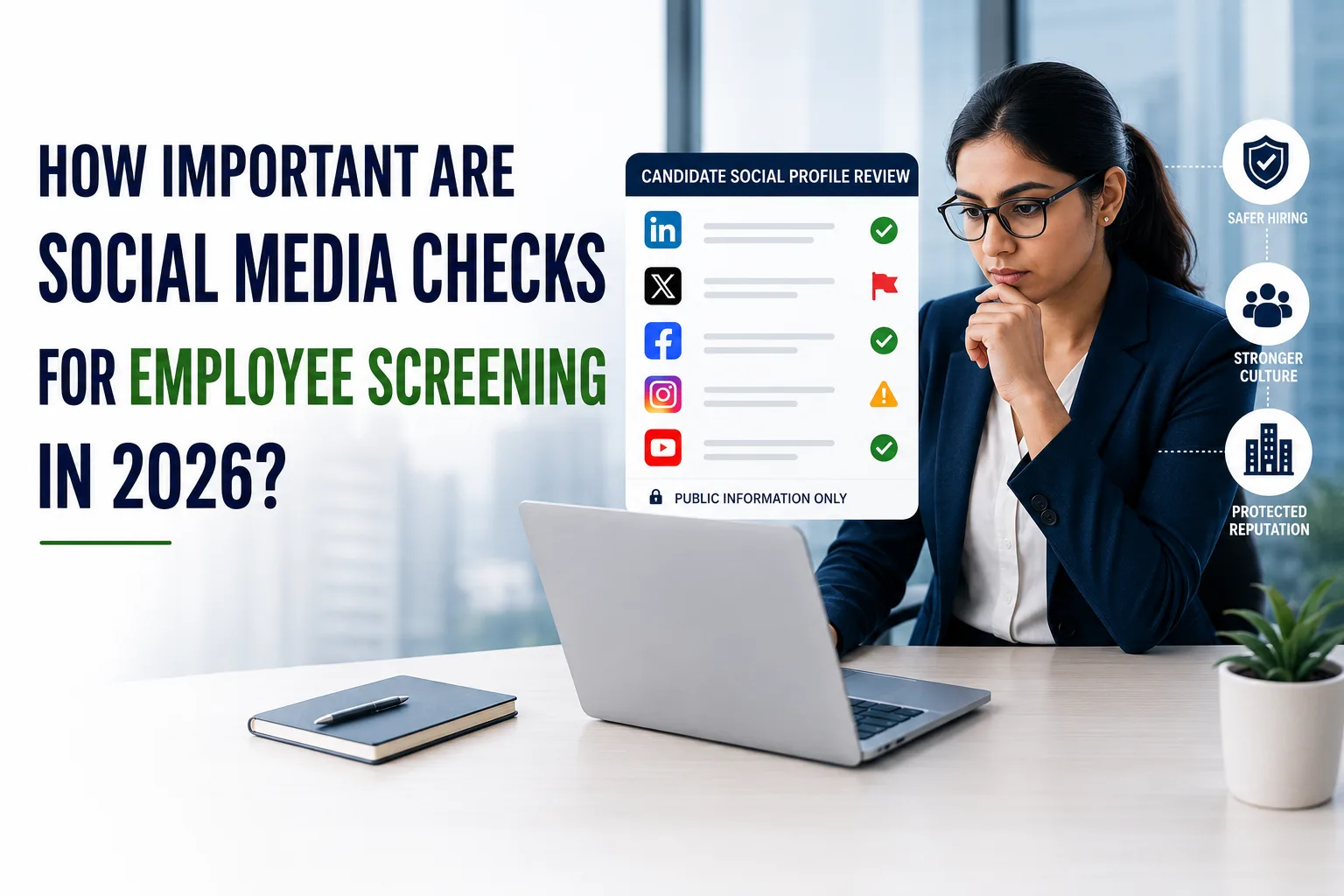
And then there’s social presence. Public behaviour doesn’t always reflect private conduct, but in some cases, it provides useful signals about risk alignment.
If your current process skips financial checks, regulatory screening, or court-level verification, there’s a high chance something important is being missed.
Regulatory Reality in India
One of the biggest misconceptions is that background screening is optional unless explicitly mandated.
In fintech, that’s not how it works.
Regulators may not always say “you must run employee background checks” in those exact words. But their expectations point in that direction.
The Reserve Bank of India requires regulated entities to maintain strong controls around access to systems and customer data. That naturally includes due diligence on the people who operate those systems.
SEBI applies “fit and proper” criteria to certain roles, especially in regulated financial entities. This includes looking at legal history, financial conduct, and overall integrity.
For insurance-linked operations, IRDAI places similar expectations on verifying individuals who handle policyholder data or funds.
Under the Prevention of Money Laundering Act, the focus extends beyond customers. Employees also become part of the risk environment.
What ties all of this together is accountability.
If something goes wrong, regulators will not ask whether you intended to verify. They will ask whether you did and whether you can prove it.
That’s why documentation matters just as much as the checks themselves.
Background screening for Fintech, in this context, is a part of building the defensible compliance process.
The Cost of Skipping Background Checking for Fintech
It’s easy to think of verification as something that slows things down.
Until you look at what happens when it’s skipped.
Insider fraud is one of the most common risks. Industry data suggests that financial sector fraud incidents can easily cross ₹1.5 crore. And that’s often just the direct loss. Add legal costs, operational disruption, and recovery efforts, and the number goes higher.
Regulatory consequences are another factor. Hiring someone who appears in a regulatory database or should have been flagged can lead to audits, fines, and corrective actions. Data breaches create immediate damage. Customers lose trust quickly, and rebuilding that trust takes time.
Then there’s reputation. This is harder to measure, but it stays longer. Once credibility is affected, every future interaction becomes harder. When you compare these risks to the effort required to run proper checks, the trade-off becomes clear. The real question is not whether you can afford to run background checks. It’s whether you can afford not to.
What a Strong Screening Process Looks Like
A strong screening process doesn’t try to do everything at once. It focuses on doing the right things consistently. It starts by recognizing that different roles carry different risks. A developer with backend access needs deeper checks than someone in a limited operational role.
It uses automation where it makes sense—mainly for collecting and organizing data – but doesn’t rely on it blindly. Some verifications still need human review, especially when information is unclear or inconsistent. It gives hiring teams visibility. Knowing where each check stands helps decisions move faster.
It also creates proper records. Not just for internal clarity, but for situations where proof is required later. And importantly, it doesn’t stop at hiring.
Continuous monitoring is becoming more relevant because risks don’t follow hiring timelines. They can appear later, often when no one is actively looking. A good system is not about complexity. It’s about clarity and consistency.
How to Run a Fast Background Check for Fintech
Speed matters. No question about that. But there’s a difference between moving fast and rushing. A fast background check for Fintech works when the process is designed to avoid unnecessary delays, not when steps are skipped. Automation helps reduce time spent on repetitive tasks. Instead of collecting the same information multiple times, systems can streamline that part.
A structured workflow keeps things organized. When checks follow a defined sequence, there’s less confusion and fewer delays. Prioritization also plays a role. High-risk roles can go through deeper screening, while lower-risk roles follow a lighter process. Integration with hiring systems reduces duplication. When data flows smoothly, teams don’t have to chase updates or re-enter information. What usually creates problems are shortcuts – skipping financial checks, ignoring regulatory data, or relying only on what the candidate provides.
A fast background check for Fintech should feel smooth and controlled, not rushed.
Why Many Fintech Employers Still Struggle
Most teams understand the importance of verification. The challenge is in execution. Hiring pressure is real. Deadlines are tight. Roles need to be filled. Manual processes slow things down, and when they do, people start looking for ways to move faster—even if it means cutting corners.
Lack of standardization creates inconsistency. Different roles get different levels of screening, often based on urgency rather than risk. And post-hire monitoring is often ignored. Once onboarding is complete, attention shifts elsewhere. The result is a process that exists but doesn’t fully protect.
How Global Checks Fits In
This is where structure makes a difference. Global Checks approaches background screening for Fintech as a system, not a checklist. It covers identity, address, court records, police verification, employment history, education, credit checks, and regulatory screening—but the real value is in how these are connected and executed.
The process adapts to different hiring scenarios. Whether it’s full-time roles, gig workers, remote teams, or contractual hires, the screening adjusts accordingly. Continuous monitoring adds another layer by tracking changes that may appear after onboarding. Speed is built into the workflow, but not at the cost of accuracy. Automation handles repetitive parts, while critical checks are validated properly.
Every step is documented. This makes the process not just complete, but defensible when needed. For fintech employers, this means better visibility, faster decisions, and fewer surprises. If your current system feels fragmented or inconsistent, moving to a structured background screening for Fintech approach can make a noticeable difference.
Conclusion
Most hiring decisions feel urgent in the moment. There’s pressure to move quickly, close roles, and keep things running. But in fintech, those decisions carry more weight. Because every hire comes with access. And access creates risk if it’s not controlled. Background screening for Fintech is not about slowing things down. It’s about making sure that what moves fast doesn’t break later.
Before your next hire, it’s worth asking one simple question. Are you verifying what matters, or just confirming what’s visible?
That answer usually tells you everything about your current process.
Frequently Asked Questions
Background screening is the mechanism by which employers confirm a candidate’s professional, personal, and educational information before hiring. It verifies that the given information is accurate and assists companies in making informed and safe hiring decisions.
It minimizes the risk of hiring applicants who provide false information, safeguards the company’s reputation, maintains workplace safety, and assists with legal and regulatory compliance requirements.
The most prevalent types of background checks are identity verification, criminal record check, education verification, employment history check, credit history check, and reference check.
Various types of background check can be used in different circumstances, such as loans or tenancy, while employment background screening process is particularly concerned with authenticating information pertinent to professional recruitment, including workplace behavior, skills, and job history.
The background verification process typically takes 5 to 15 business days based on the level of verification, records availability, and response rate from institutions or previous employers.
In India, identity verification is conducted through Aadhaar, PAN, or passport. At the same time, educational credentials are verified with universities, previous employment is checked with HR departments, and criminal records are checked using police/court databases. Additionally, field visits or utility bills are used to verify addresses.
Yes. Ethical and legal requirements necessitate employers to obtain written permission before conducting a background check. This helps safeguard candidate rights and avoids any lack of transparency.
Only if red flags or significant discrepancies are revealed. Slight variations in dates or details are typically resolved through candidates, while severe issues such as forged documents or criminal convictions disqualify a candidate.
Not necessarily. Although regulated industries such as finance, healthcare, and technology require employment background screening, others do it as a best practice, rather than a law.
Employers should always get the candidate’s approval, comply with data protection regulations, use third-party agencies that are authenticated, andbe fair by allowing candidates the chance to clarify discrepancies during screening.